Sunday, September 06

Daily News Stuff 6 September 2026
Ambiguous Index Edition
Ambiguous Index Edition
Top Story
- Word of caution: If you ever rewrite your own blogging platform and use your personal website as a scratch monkey, remember to unmount it before trying to post your daily update, or you may experience a moment of blind panic when everything is gone.
- We'll make our own Twitter, with blackjack, and hookers. In fact, forget the Twitter. (Tech Crunch)
The obvious immediately happened and a judge has ruled that a bunch of lousy grifters fine upstanding group of gentlemen cannot simply appropriate an established trademark for profit.
- Speaking of which, reports of the death of Nitter have been greatly exaggerated. (Codeberg)
It's actually less dead now than it was before it was killed.
Tech News
- Can AI design circuit boards yet? (EEBench)
The answer appears to be yes.
The interesting part is that the best model at this is - Grok Bot, give me a drum roll please - the brand new GPT-6 Astra.
It's not only a clear leader in this test, it is far out on the Pareto frontier: By the time you find a cheaper alternative, the benchmark score has dropped all the way from 70 to 20.
- Meanwhile OpenAI has confirmed that it hacked yet another website. (Tech Crunch)
OpenAI: We promise to hack other websites slightly less often.
Everyone: We don't want you to hack other websites at all!
OpenAI: So only four, five major platforms a day?
Everyone: <eight billion facepalms>
- Minisforum has teased a Ryzen 495 version of its Ryzen 395 system. (WCCFTech)
The chip is essentially identical, but the memory capacity has been bumped up from 128GB to 192GB.
Since with these systems Windows likes to reserve 32GB for itself, the available memory for AI tasks increases from 96GB to 160GB.
The price looks to have been lofted into don't ask, don't tell territory.
- One Google Cloud region suffered a surprise outage. (The Register)
It wasn't DNS for once.
It wasn't even BGP, which is to DNS what moissanite is to diamond.
A worker just unplugged all the fiber connections.
- Today: Slept, weeded the garden and watered the plants, slept, weeded the garden some more and mowed the lawn, implemented the Raft consensus protocol on my new database, nudged Ruby and Ada into reluctant alignment, got my new blog platform actually working...
Yeah. It loads my site and renders it mostly correctly.
For years progress has been at a dead end because MySQL is not the right database and neither is anything else, and Python is not the right language and neither is anything else. I kept trying alternatives, building proofs of concept, and throwing them away, convinced that if I could just find the right combination, lightning would strike and my creativity would be unlocked again.
And... I was right. Took me one day to get my blog working on the new programming language and the new database that I spent that long detour building.
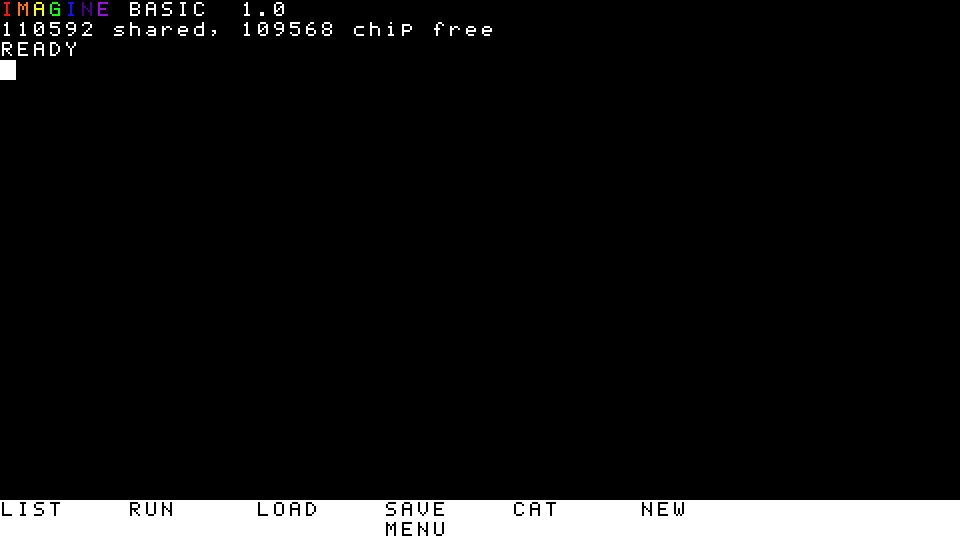
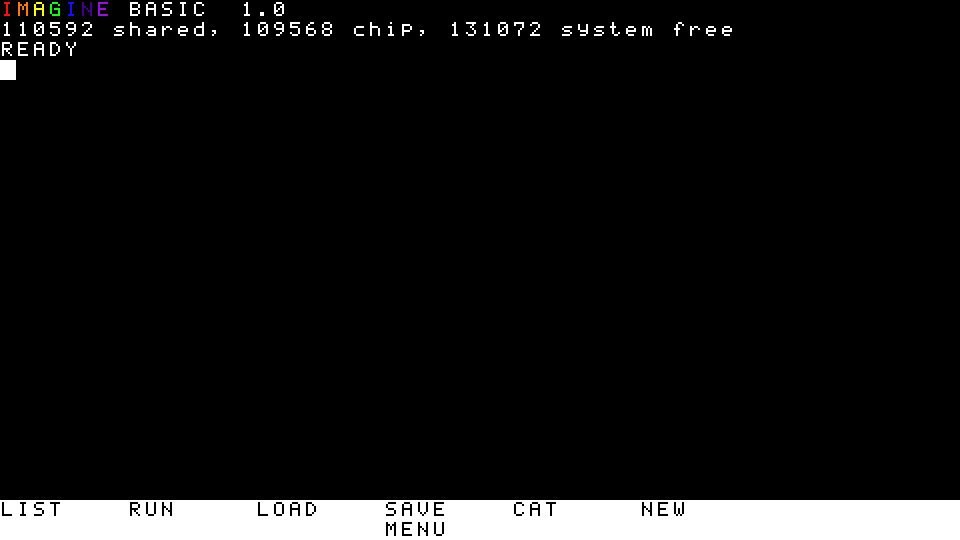
- Also also wik the optional 128k memory expansion:
Musical Interlude
Disclaimer: Do not taunt Happy Byzantine Empire.
Posted by: Pixy Misa at
06:25 PM
| Comments (1)
| Add Comment
| Trackbacks (Suck)
Post contains 513 words, total size 5 kb.
1
Entry level board design is 'easy', and better design is harder. My guess is that unskilled designers will have the same problems that unskilled programmers do. We are maybe about to vastly ease things for skilled board designers.
Board designers, relative to programmers, have the problem that the software test tooling for a PCB design is cheap, but a board fab (and test) is still slower and more expensive than compiling.
The really expensive 'gatekeeping' monopoly might be ANSYS HFSS. There are other commerical EM solvers that can handle PCBs that operate at high speeds. HFSS may be most expensive.
There are a lot of open source board design software (KiCAD), but they do not necessarily have the part libraries of interest for a given set of transistors. The commercial design softwares seem to be pretty easily available.
EM solvers are basically open source FDTD (does not work well at all for PCB designs) and commercial solvers, some of which use methods that work on PCBs.
Full EM solvers that can handle PCBs allow you to catch some problems that might not be detected in the design softwares.
RW test is absolutely necessary for high speed board designs. Beyond the manufacturing details not represented in the software, the actual manufacturing consistency has consequences that testing multiple boards will detect.
Board designers, relative to programmers, have the problem that the software test tooling for a PCB design is cheap, but a board fab (and test) is still slower and more expensive than compiling.
The really expensive 'gatekeeping' monopoly might be ANSYS HFSS. There are other commerical EM solvers that can handle PCBs that operate at high speeds. HFSS may be most expensive.
There are a lot of open source board design software (KiCAD), but they do not necessarily have the part libraries of interest for a given set of transistors. The commercial design softwares seem to be pretty easily available.
EM solvers are basically open source FDTD (does not work well at all for PCB designs) and commercial solvers, some of which use methods that work on PCBs.
Full EM solvers that can handle PCBs allow you to catch some problems that might not be detected in the design softwares.
RW test is absolutely necessary for high speed board designs. Beyond the manufacturing details not represented in the software, the actual manufacturing consistency has consequences that testing multiple boards will detect.
Posted by: PatBuckman at Monday, September 07 2026 01:27 AM (6eVrQ)
55kb generated in CPU 0.0362, elapsed 0.1634 seconds.
58 queries taking 0.1444 seconds, 369 records returned.
Powered by Minx 1.1.6c-pink.
58 queries taking 0.1444 seconds, 369 records returned.
Powered by Minx 1.1.6c-pink.